
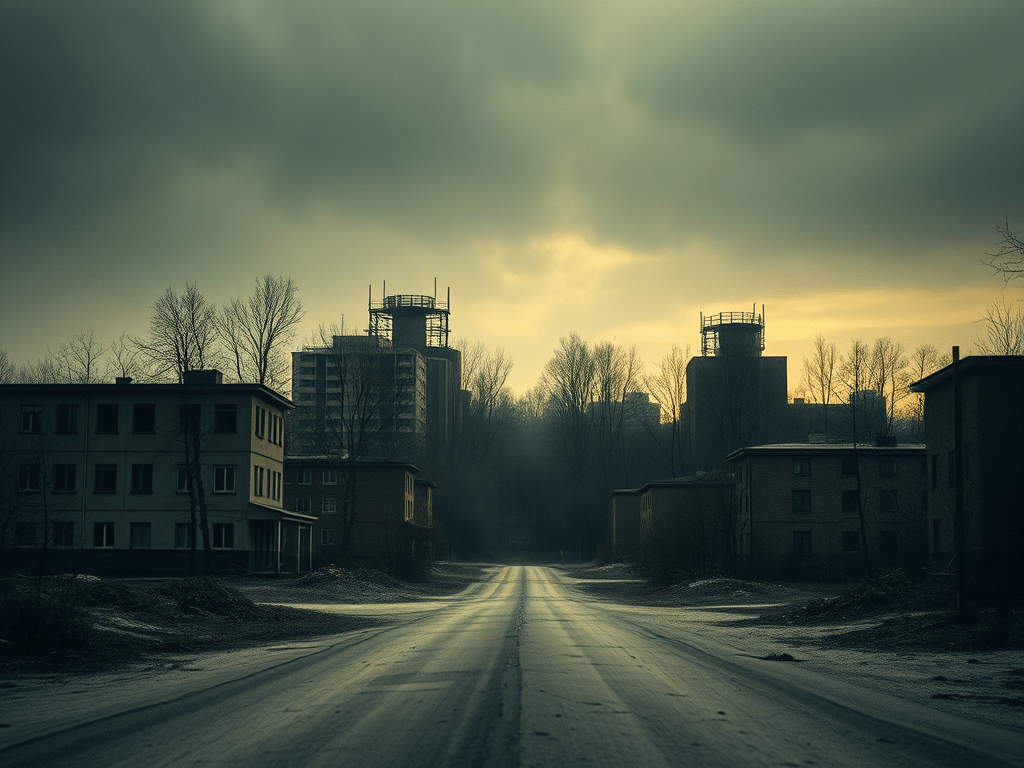
HBO’s miniseries Chernobyl (2019) is acclaimed by many as one of the most impactful and chilling television series, ever. Written by Craig Mazin and directed by Johan Renck, this five-part series portrays the Chernobyl Nuclear Disaster in April 1986 which has been labelled as being “the worst man-made disaster in history.”
This has taken a step beyond merely chronicling the explosion and moved to explore the human stories (and lies, and sacrifices) surrounding it — all grounded somewhat in reality. HBO’s Chernobyl serves as a case study in the careful balance between historical authenticity and dramatization, detailing how Soviet-controlled systemic corruption, secrecy and denial played out leading up to and continuing after the disaster. It walks a tightrope between political commentary and pathos in such a way that viewers can feel both the horror of something as subversive as radiation (it cannot be seen or touched) and what it would have taken to beat it into submission.
The narrative is anchored by three main players: Legasov (Jared Harris), a scientist who ultimately was appointed the point man to investigate and contain the crisis; Shcherbina (Stellan Skarsgård), a Soviet official who goes from skepticism, then resistance to an acceptance of the truth through much lip-biting and rationalization; and Khomyuk (Emily Watson), a composite character designed to represent many scientists attempting uncover the reason behind why the system allowed the mishap in the first place. These are people who embody the conflict between truth and misinformation, reason and obfuscation.
One of the most notable qualities about the series is how committed they are to maintaining a vibe in every aspect. The film features stark and eerie cinematography, utilizing a palette of browns and grays marbled with blacks to capture both the physical coldness so prevalent in Boston during its titular season, as well as mirror the political atmosphere swirling around it. The jolting score from Hildur Guðnadóttir is equally industrial and features a lot of droning that further heightens the gloominess. Chernobyl, instead of using jump scares or in your face horror, is scary via silence, slackness and radiation that you can’t see.
The series also raises up the voices of everyday people who lived through this and who gave – firefighters, plant workers, nurses, miners and soldiers — many whose lives were at risk or tragically lost to prevent disaster. Such accounts serve to highlight the immense human cost, both from the failure itself and from the silence that followed.
Chernobyl – Largely praised by critics, with multiple Emmy and Golden Globe awards Viewers and historians alike appreciated its focus on accuracy, although some scholars of Soviet history criticized particular details for being exaggeratedly dramatic. But its cultural impact was deep, rekindling worldwide fascination in nuclear power and Soviet record, all while raising anew the dangers of disinformation.
All told, Chernobyl is far more than a history lesson, but rather a chilling reminder about the consequences of lies and the fragility of truth as well as what it truly takes to face disaster head-on. It is for this reason that the series is a reminder that catastrophes are rarely accidental events, often involving some kind of hubris, denial or systemic screw-up by us humans.
 Joshua T Craig
Leave a comment