
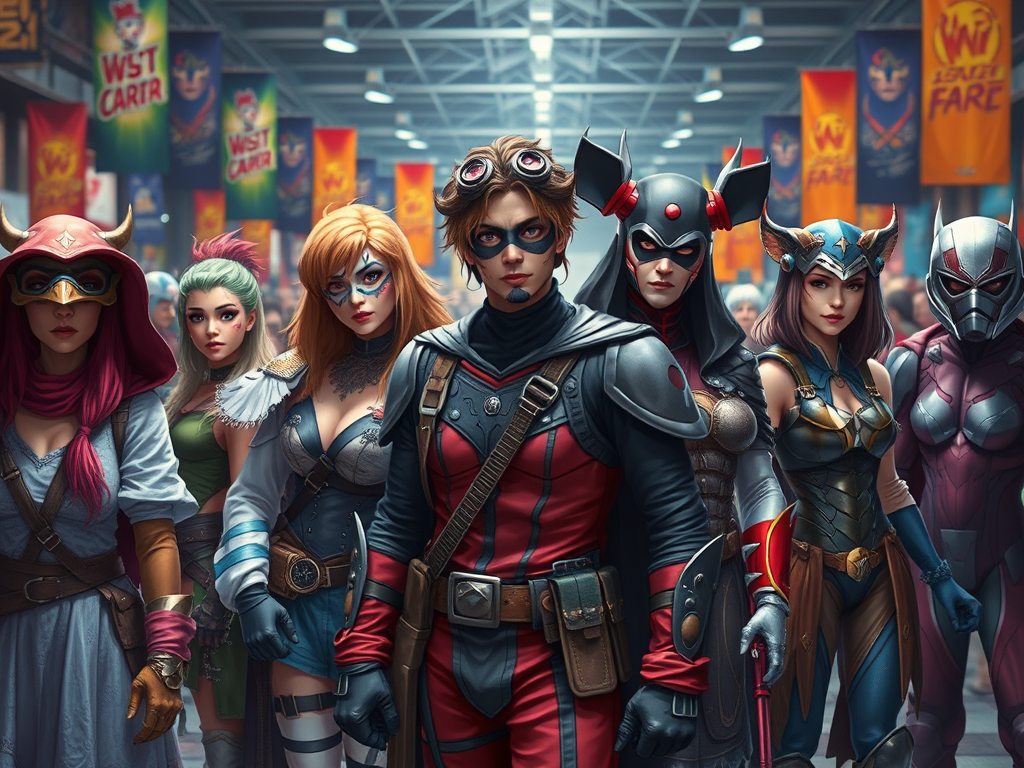
Cosplay reveals just how creative and personal self-expression can be in our often soulless commercialized world. Cosplay, which is a shortened version of the term costume play, refers to dressing up as characters from movies, video games, anime, comics or whatever pop culture references one can imagine. But it goes well beyond simply getting dressed as these characters, and starts to speak volumes about the type of storytelling we do and how it affects us all.
The Origins of Cosplay
Cosplay has surprisingly old origins. Fans dressing up in costumes as their favorite characters has been around well from the mid-20th century most notably spurred on by science fiction conventions. On the other hand, in the 1980s journalist Nobuyuki Takahashi created the term cosplay after visiting a science fiction convention in Los Angeles.
Since then, cosplay has snowballed into a massive global hobby with the birth of anime conventions and comic cons across the world. A subculture that started out as an obscure pastime has grown into a lively and robust genre of individuals well esteemed by many.
A Form of Creative Expression
For cosplay, its soul will continually exist in living with the character. Cosplayers often make their own costumes, spending a few days to several months on crafting their intricate ensembles. They make cloth, armor, wigs and prop reproductions with outstanding accuracy.
But accuracy is not everything about cosplay. It’s also about interpretation. Numerous cosplayers even add their own twist to a costume, such as a character that is gender bent (if the character was originally male in the story, then some women dress up or come as female versions of the same exact character or vice versa), steam-punk type outfits and costumes (think of an anime or other character with gears), and absurd things that would never occur practically ever. It’s a (fast) moving art that is multifaceted, merging fashion, design, performance and fandom.
More Than Just Costumes
Performing in a Cosplay group is so much more than just your outfit. Most cosplayers also mimic a character, voice, stance and personality. Others compete in contests where they are scored on not just the quality of their costume, but how well they inhabit the character’s soul. Cosplay is performance art!
This makes cosplay a kind of theatre. It enables people to go beyond their normal personas and adopt a role where they can be daring, emotional, good or evil.
The Power of Community
Cosplay has a way of creating this amazing sense of community. At conventions and on a myriad of online platforms, individuals from every facet of life who share admiration for pop culture, friendships and fandoms. There is an exchange of advice and encouragement too. Cosplay can provide a feeling of kinship that some might not find elsewhere.
It also is a place that embraces diversity. They come in all shapes, sizes and colors, and many of them are subverting traditional ideas around race, body shape or gender. Cosplay is part of that, and the mainstreaming of Japanese pop culture has helped make a number of people more comfortable about who they are , with or without a costume.
Cosplay and Confidence
Most cosplayers will tell you that a character gives them confidence as well. Cosplay can offer strength to those who are shy or anxious. It gives you an opportunity to break out of your shell and meet new people, hiding behind the façade of a costume. Protective, freeing, transformative even.
Challenges and Misunderstandings
While cosplay is great, but it comes with its own set of challenges. Even then some outsiders arguably still find the practice to be juvenile or bizarre. Cosplay among female cosplayers, in particular, can come with an abundance of unwanted attention, comments and harassment.
Nevertheless, in the cosplay world, we continue to resist against such behaviors and mostly promote mutual respect, safety and consent into our endeavors. This is why the phrase “cosplay is not consent” has become a crucial part of ECE culture, to remind everyone out there that while they may love these characters, respect should never venture into the territory of harassment.
Conclusion: The Magic of Cosplay
At its heart, Cosplay is more than wearing your costume, it’s celebrating one of the most imaginative and passionate kinds of fandom that exists in our geeky world. It is an outlet for individuals to explore their appreciation for stories, characters, and worlds that changed them in someway. Cosplay, however, is about so much more than that. It reminds us that it is okay to play, to create, to connect, and to rejoice in the worlds that move us.
Cosplay is for everyone who is a fan, creator, performer or just curious. Because, in the world of cosplay, anyone can be a hero. There’s only one rule of cosplay: don’t be a dick!
 Joshua T Craig
Leave a comment